Best Coffee Scales Under $60: What Actually Matters
Finding the best coffee scales under $60 comes down to one question most guides overcomplicate: does it hit 0.1g accuracy or not? A coffee scale is one of the cheapest, most effective upgrades you can make to your brewing setup — and it’s often the one beginners skip. This guide covers what actually matters when choosing from the best coffee scales under $60, why 0.1g accuracy is the real floor to look for, and which features are worth paying for versus which ones are just marketing.
This article contains affiliate links. As an Amazon Associate, I earn from qualifying purchases at no extra cost to you.
Why a Coffee Scale Matters More Than People Expect
A scoop measures volume, not weight, and identical scoops hold different amounts of coffee depending on grind size and how tightly the grounds are packed. That inconsistency changes your final cup more than most people realize.
The precision required is smaller than it sounds, but it matters. A 1-gram error on an 18-gram espresso dose is a 5.5% swing in your coffee-to-water ratio, and at a standard 1:2 extraction, that shift is genuinely noticeable in the cup. This is why a scale that only reads to the nearest full gram — like many ordinary kitchen scales — isn’t precise enough for serious coffee brewing, even though it looks similar to a dedicated coffee scale at a glance.
The One Spec That Actually Matters: 0.1g Accuracy
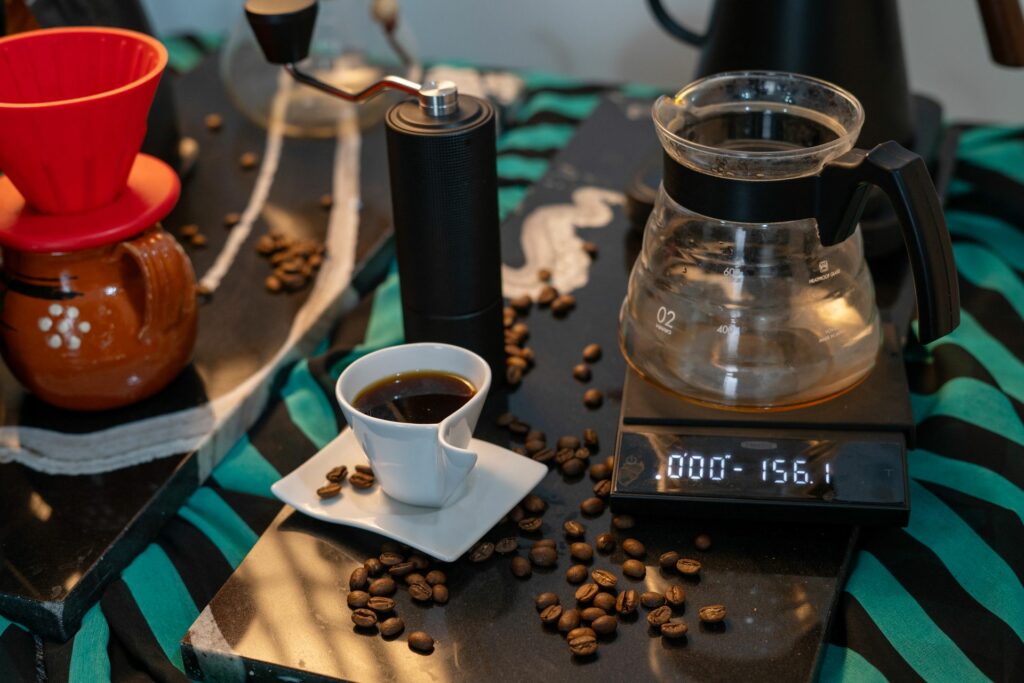
Every credible comparison of coffee scales converges on the same baseline: 0.1 gram accuracy is the floor, not a premium feature. For most home brewing methods, this level of precision is sufficient — pour-over, French press, AeroPress, and standard espresso dosing all benefit clearly from 0.1g resolution over 1g resolution.
Espresso enthusiasts chasing extremely precise extraction yields sometimes look at 0.01g accuracy, but the real-world improvement over 0.1g is marginal for typical home use. Don’t pay extra for decimal precision beyond 0.1g unless you have a specific reason to need it.
Budget Scales ($25–60): What You Actually Get
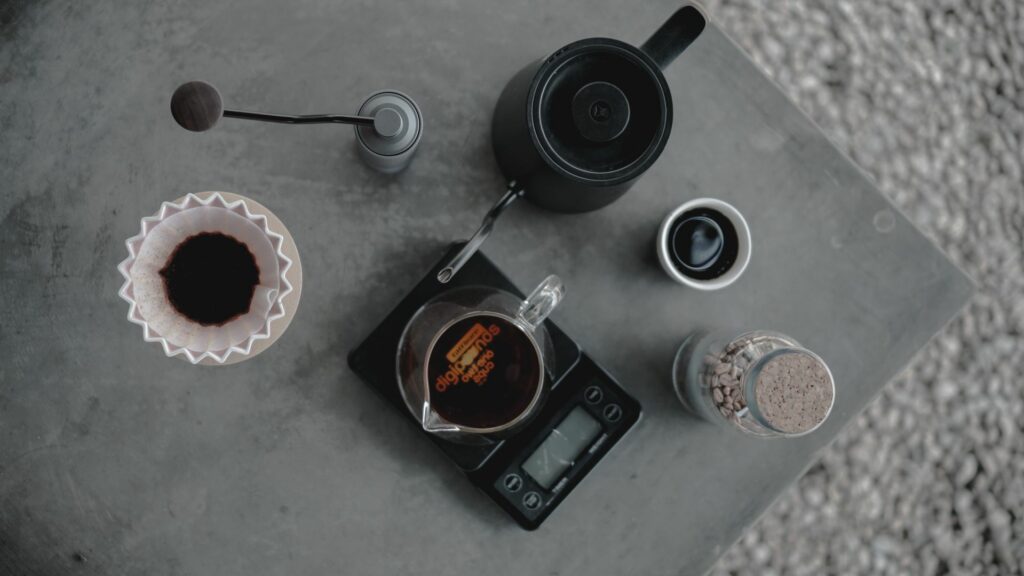
Scales in this price range reliably handle the core job — accurate weighing with a tare function and a basic timer — without the extras found on pricier models like Bluetooth app connectivity, ultra-fast refresh rates, or premium water resistance ratings.
What’s consistently good at this price point:
- 0.1g accuracy, matching pricier scales on the core spec that actually affects your brew
- A built-in timer, letting you track bloom time and total brew time on the same display
- A tare button to zero out the weight of your cup, dripper, or portafilter before adding coffee
What you’re realistically giving up compared to pricier scales:
- Slower response time — budget scales can take a bit longer to stabilize a reading during a fast pour, which mostly affects pour-over technique more than dosing
- Smaller weighing platforms, which can matter if your brewer or espresso portafilter is unusually large
- No app connectivity or long-term data logging, features aimed at people tracking shots obsessively over time
For most home brewers making one or two cups a day, none of these tradeoffs meaningfully affect the coffee in the cup. They matter more to people developing very fast, very precise pour-over technique or logging espresso data over time — a smaller group than the average home coffee drinker.
Features Worth Having vs Features You Can Skip
Worth having, even at a budget price:
- 0.1g accuracy — the non-negotiable baseline covered above
- A tare button — essential for zeroing out containers before weighing coffee or water
- A built-in timer — genuinely useful for tracking brew time without needing a separate phone timer
- A splash-resistant platform — coffee and water spills happen; a scale that can survive a splash without malfunctioning is worth having, even if it’s not fully waterproof
Nice to have, but skippable on a budget:
- Bluetooth app connectivity and shot-data logging — useful for people who want to track and analyze every shot over time, unnecessary for casual daily brewing
- Ultra-fast refresh rates under 50 milliseconds — genuinely useful for very fast, technique-heavy pour-over styles, but not something a beginner needs to prioritize
- Premium water resistance ratings (like IPX6) — nice for durability, but a splash-resistant budget scale will last plenty long for home use with reasonable care
Choosing the Right Size for Your Brew Method
Scale size should match how you actually brew, not just be picked at random.
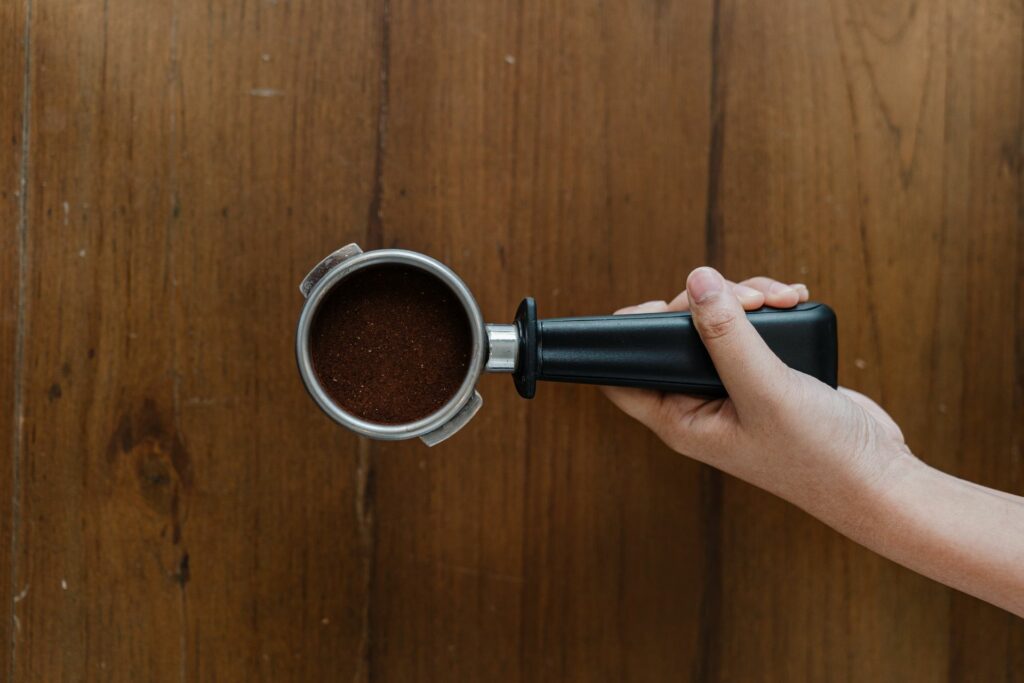
For espresso: a smaller, compact scale that fits under the portafilter on your machine’s drip tray matters more than platform size. Check that a budget scale’s dimensions actually fit your specific machine before buying.
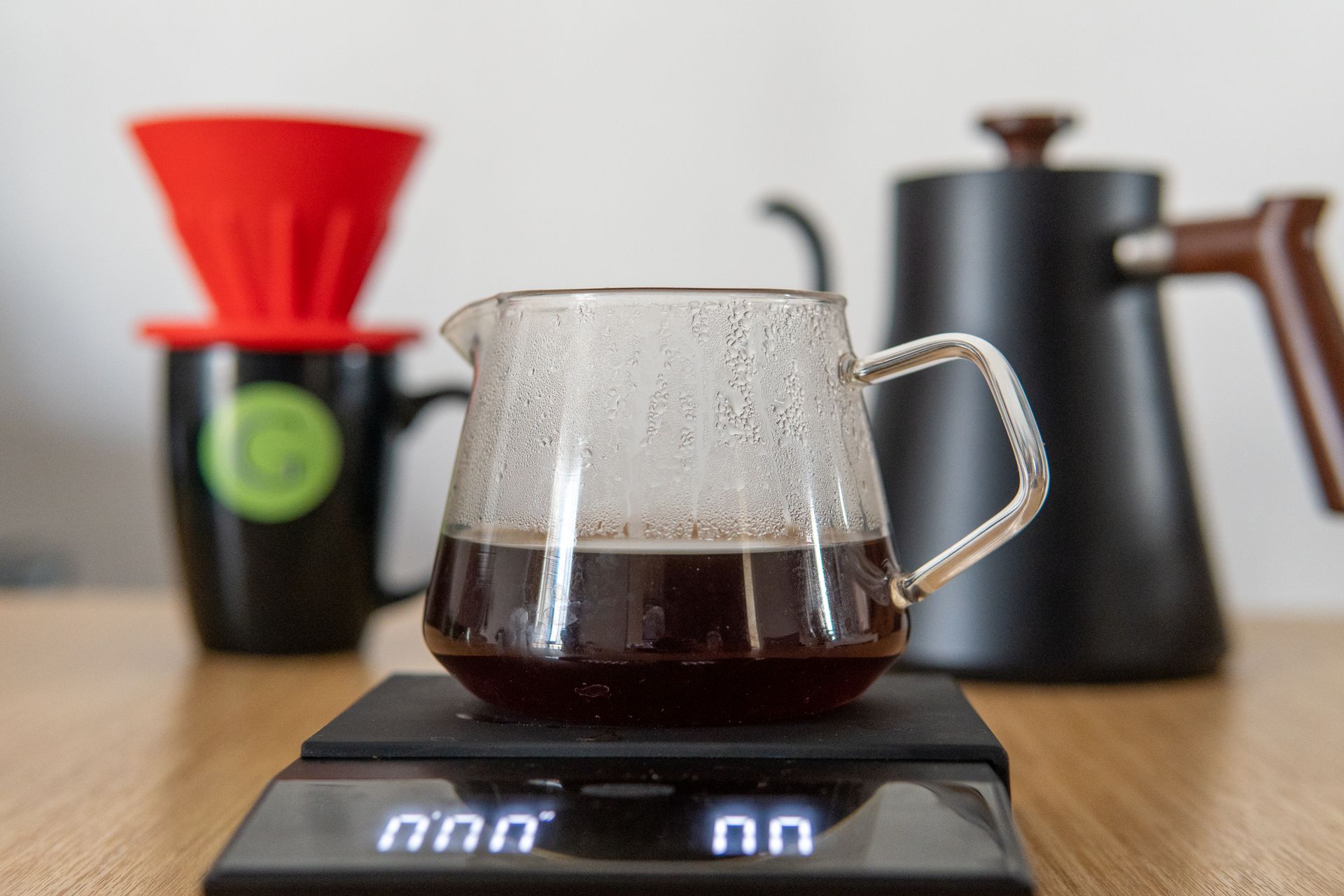
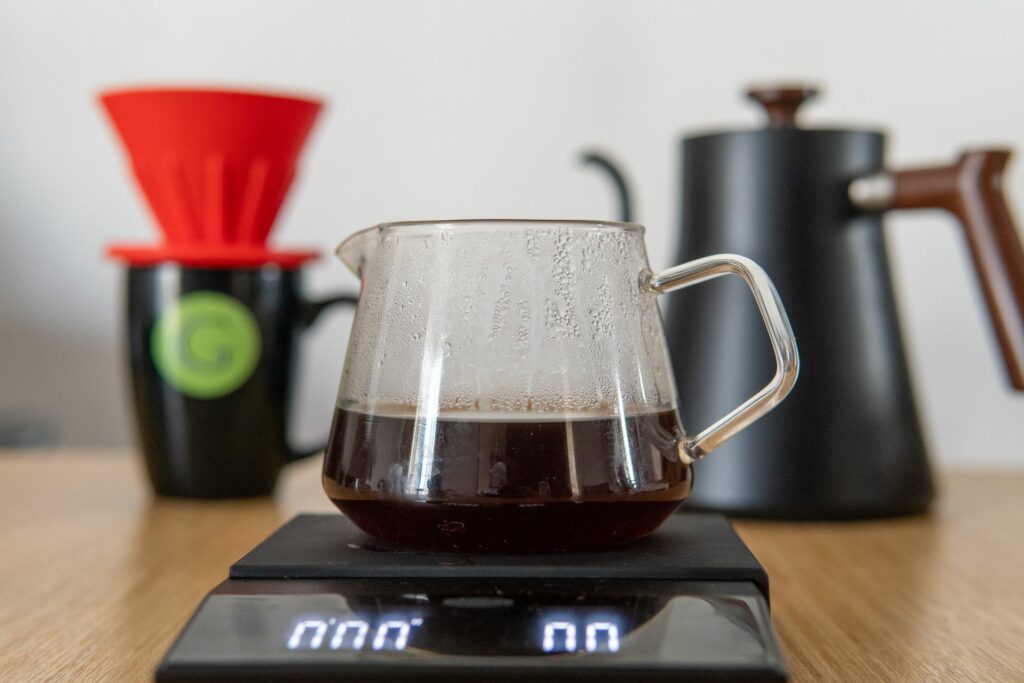
For pour-over: a slightly larger platform is more useful, since it needs to accommodate your dripper, filter, and mug or server all at once.
For methods using larger vessels (a Chemex, a large French press, or a bigger pour-over server), scales with a higher weight capacity — 2kg is standard, but some go up to 3kg — become genuinely useful, since the vessel itself can weigh several hundred grams before you even add coffee or water.
Three Budget Scales Actually Worth Buying
Hario V60 Drip Scale — around $46-48 The standard choice for pour-over specifically. It offers genuine 0.1g accuracy, but only within the 2-200g range — above 200g, it steps down to 0.5g increments, and above 500g, to 1g increments. This is worth knowing if you plan to weigh a heavier setup (like an espresso portafilter with a cup underneath), since the precision that matters most won’t be available once you cross 200g total weight. For straightforward pour-over dosing, this limitation rarely comes into play.
OXO Brew 6 lb. Precision Scale with Timer — around $55 Measures from 0.5g upward in 0.1-gram intervals, with a tare function and pour-over-optimized timer. It has a higher overall weight capacity (6 lb / roughly 2.7kg) than the Hario, making it more flexible for larger brew setups like a Chemex or bigger French press, while still keeping decimal precision at the lower end where dosing accuracy matters most.
Timemore Black Mirror Basic — around $60 Consistently mentioned as the budget pick that still delivers 0.1g precision alongside a timer and unit switching (grams/ounces), without the app connectivity or premium water resistance of pricier Timemore models. A solid, no-frills option if the Hario’s weight-range limitation is a concern for your setup.
A note on Greater Goods Coffee Scale: also worth considering — it offers 0.1g precision, a waterproof silicone cover (a genuine step up in durability for the price), and a higher 6.6lb capacity, making it a strong alternative to the OXO if water resistance matters more to you than brand recognition. Typically priced in the $30 range.
Common Mistakes When Buying a Budget Coffee Scale
Buying a scale that only reads to 1g. This is the single most common mistake. A scale that looks like a coffee scale but only measures in whole grams isn’t precise enough for consistent brewing, regardless of how cheap or convenient it seems.
Assuming a kitchen scale is good enough. General kitchen scales are often built for measuring larger quantities like flour or meat, and many have slower response times, less stable readings at low weights, and lower precision than a scale actually designed for coffee.
Ignoring platform size relative to your brew method. A scale that’s perfect for pour-over might be awkward or impossible to fit under an espresso portafilter, and vice versa. Check the actual dimensions against your setup before buying.
Overpaying for features you won’t use. App connectivity and data logging are genuinely valuable for some people, but they’re not worth the price jump if you’re just trying to brew a consistent cup at home without tracking every shot over time.
Summary
A budget coffee scale in the $25–60 range gives you the one spec that actually matters — 0.1g accuracy — along with a tare button and timer, covering everything most home brewers genuinely need. The tradeoffs at this price point (slower response time, smaller platform, no app features) matter far more to people chasing very precise technique or logging data over time than to someone brewing a solid cup of coffee at home every morning. Match the scale’s size to your actual brew method, confirm it reads to 0.1g, and you’ve covered the fundamentals without overspending.