How to Make Great Coffee at Home Without an Espresso Machine: A Budget Beginner’s Guide
You don’t need an espresso machine to make genuinely good coffee at home. Some of the most highly regarded brewing methods in the world — French press, pour over, AeroPress — don’t involve espresso at all, and most of them cost less than $50 to get started with. This guide covers everything a complete beginner needs to make coffee at home without an espresso machine: which method to pick, what beans to buy, what grind size matters, and the handful of cheap tools that make the biggest difference.
Why You Don’t Need an Espresso Machine to Make Coffee at Home
Espresso is just one brewing method among many, and it happens to be one of the more expensive and technically demanding ones to get right at home. Methods like French press and pour over rely on gravity and immersion rather than pressure, which means the equipment is simpler, cheaper, and far more forgiving while you’re still learning.
The tradeoff is simple: espresso requires a fine, precise grind and real pressure to extract properly, while methods like French press work with a coarse, forgiving grind and just time. That’s exactly why they’re the better starting point for a beginner on a budget.
Choosing Your Brewing Method: French Press vs Pour Over vs AeroPress vs Moka Pot
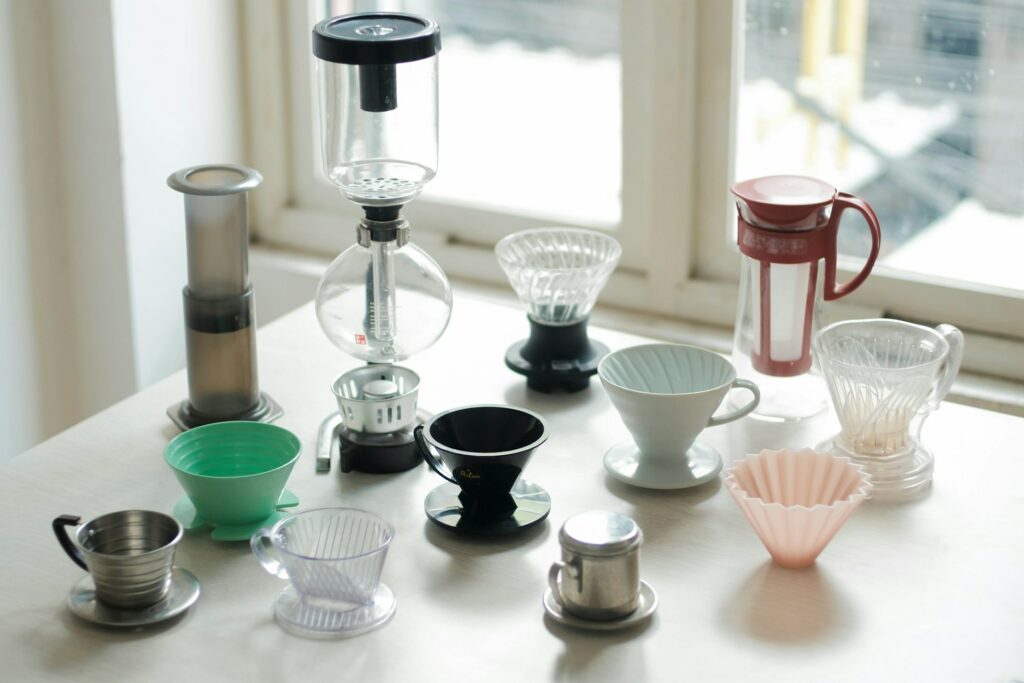
Each method produces a noticeably different cup, and picking the right one depends on what you actually want to drink.
French Press — best for a rich, full-bodied cup The French press uses a metal mesh filter instead of paper, which lets natural coffee oils and fine particles through. This produces a heavier, bolder cup with more texture than paper-filtered methods. It’s also the simplest method to learn, with almost no technique required beyond timing.
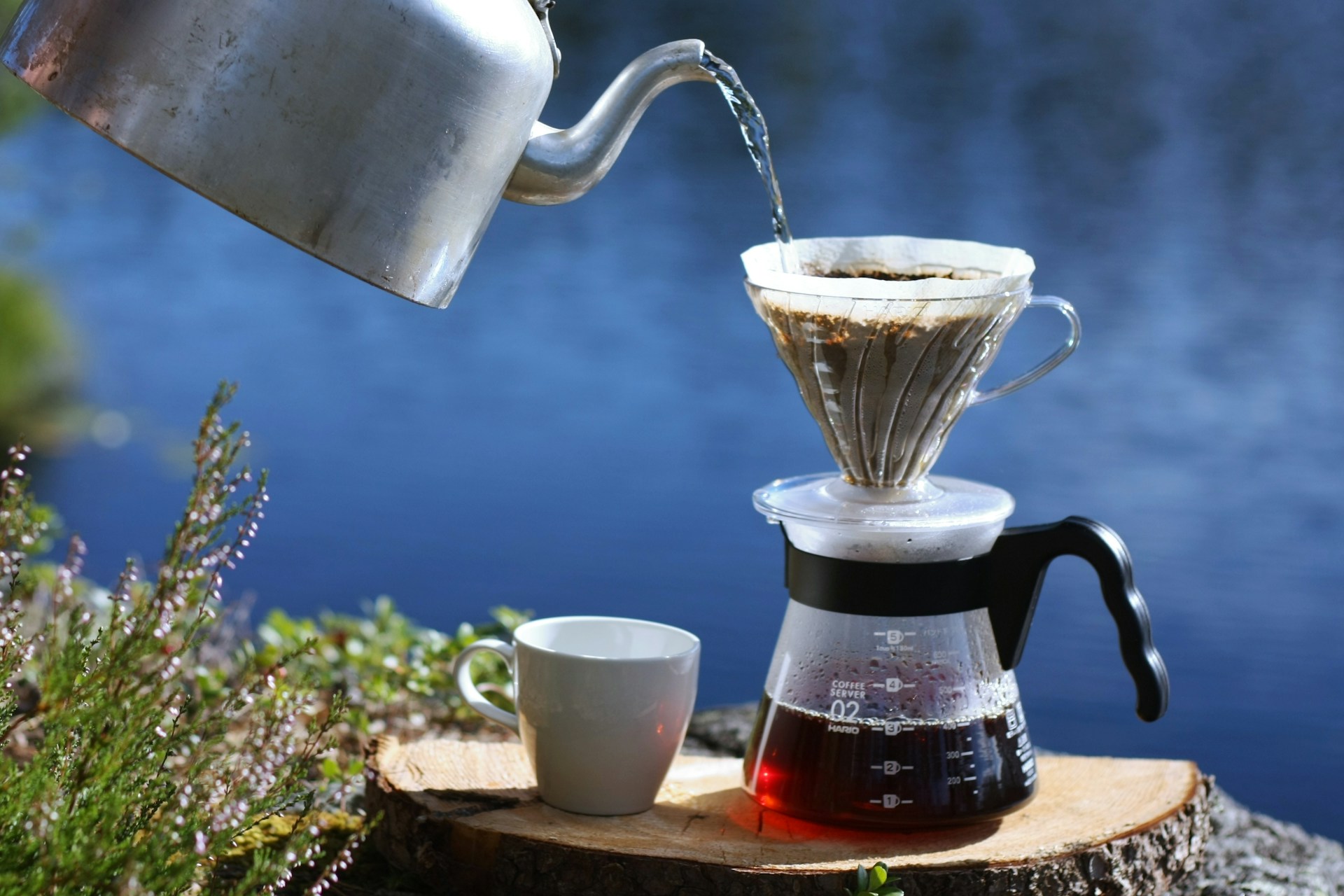
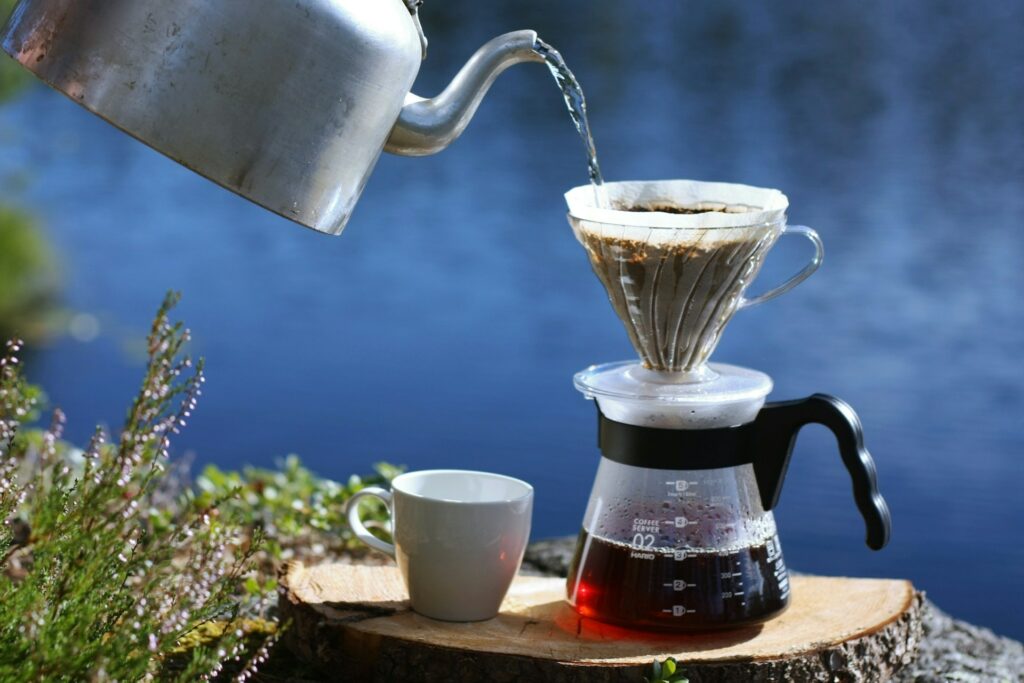
Pour Over — best for a clean, bright cup Pour over uses a paper filter and a slow, controlled pour, which produces a lighter, cleaner cup that lets subtle flavor notes come through more clearly than a French press. It takes a bit more attention to your pour technique, but it’s still very approachable for a beginner.
AeroPress — best for speed and flexibility The AeroPress is a hybrid brewer, combining immersion and light pressure. It’s fast, extremely forgiving of small grind or timing mistakes, and works well for both a strong, espresso-like concentrate and a lighter, filter-style cup depending on the recipe you follow. It’s also the most portable option of the four, which matters if you travel.
Moka Pot — best for a strong, stovetop cup The Moka pot uses steam pressure to push water through the grounds, producing a strong, concentrated cup that’s closer to espresso in character than any of the other three methods, without needing an actual espresso machine. It requires a stovetop and a bit more attention to heat control than the other methods.
If you’re not sure where to start: French press is the easiest and cheapest way to make a genuinely good cup with almost no learning curve. Pour over is the better choice if you want a cleaner, brighter cup and don’t mind a slightly more hands-on process.
What You Actually Need to Get Started (Budget Breakdown)
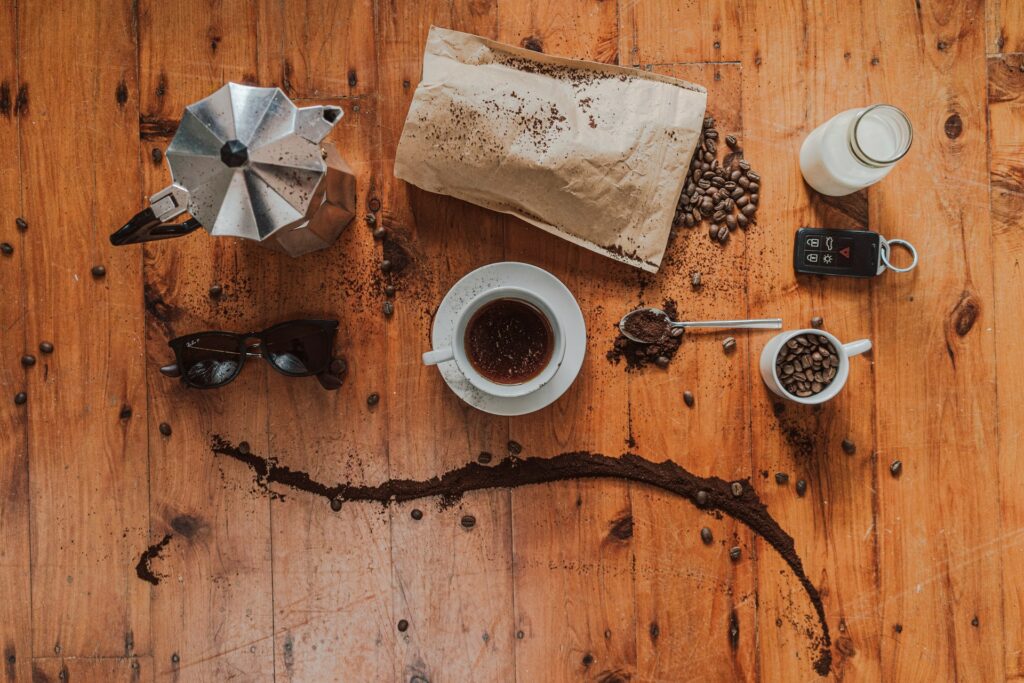
You can get a complete, capable setup for well under $75 total:
- Brewer (French press, pour over dripper, AeroPress, or Moka pot): $15–35
- Burr grinder (hand or electric): $25–40 for a basic hand grinder, more for electric
- Kitchen scale: $10–15
- Fresh whole bean coffee: $12–18 per bag
This is a genuinely complete setup — nothing here is optional filler. Each piece affects your final cup in a way that’s hard to fix with technique alone.
Why a Grinder Matters More Than Anything Else You’ll Buy
If you only spend money on one piece of equipment, make it the grinder, not the brewer itself. Grind consistency affects extraction more than any other single variable, and pre-ground coffee starts losing meaningful flavor within days of grinding, regardless of how well it was roasted.
Burr grinder vs blade grinder: A blade grinder chops beans randomly, producing an inconsistent mix of fine dust and large chunks in the same batch — the dust over-extracts and turns bitter while the chunks under-extract and taste sour, both ending up in the same cup. A burr grinder crushes beans between two consistent surfaces, producing a uniform particle size, which is what allows even extraction. A basic hand burr grinder in the $25–40 range will outperform any blade grinder regardless of price.
Grind size by method:
- French press: Coarse, similar in texture to sea salt
- Pour over: Medium-fine to medium, similar to granulated sugar
- AeroPress: Medium, similar to beach sand — flexible depending on your recipe
- Moka pot: Fine, but slightly coarser than espresso grind, similar to table salt
Water Temperature: Why It Changes by Roast Level
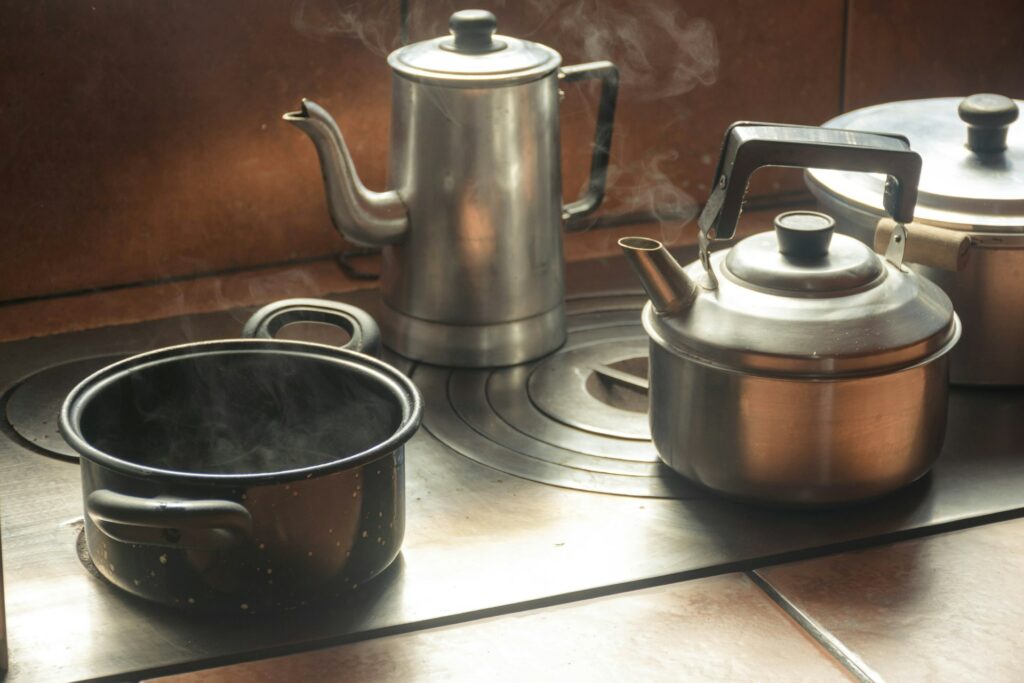
Water temperature isn’t one-size-fits-all, and it affects every brewing method covered here. The Specialty Coffee Association’s standard range is 195–205°F (90–96°C) for most brewing methods, but where you land in that range should shift depending on your roast:
- Light roasts are denser and benefit from the hotter end of the range, around 200–205°F (93–96°C), to extract fully
- Dark roasts are more porous from longer roasting and extract faster, so 190–198°F (88–92°C) helps avoid pulling out excess bitterness
For the Moka pot specifically, avoid letting the water boil vigorously on the stovetop — gentle, controlled heat produces a better result, and a rolling boil tends to push the coffee toward bitterness.
If you don’t own a thermometer, a simple rule of thumb: bring water to a full boil, then let it sit off the heat for 30–45 seconds before pouring. This typically brings it into the right range without needing to measure exactly.
Ratios: Why a Scale Matters More Than a Scoop
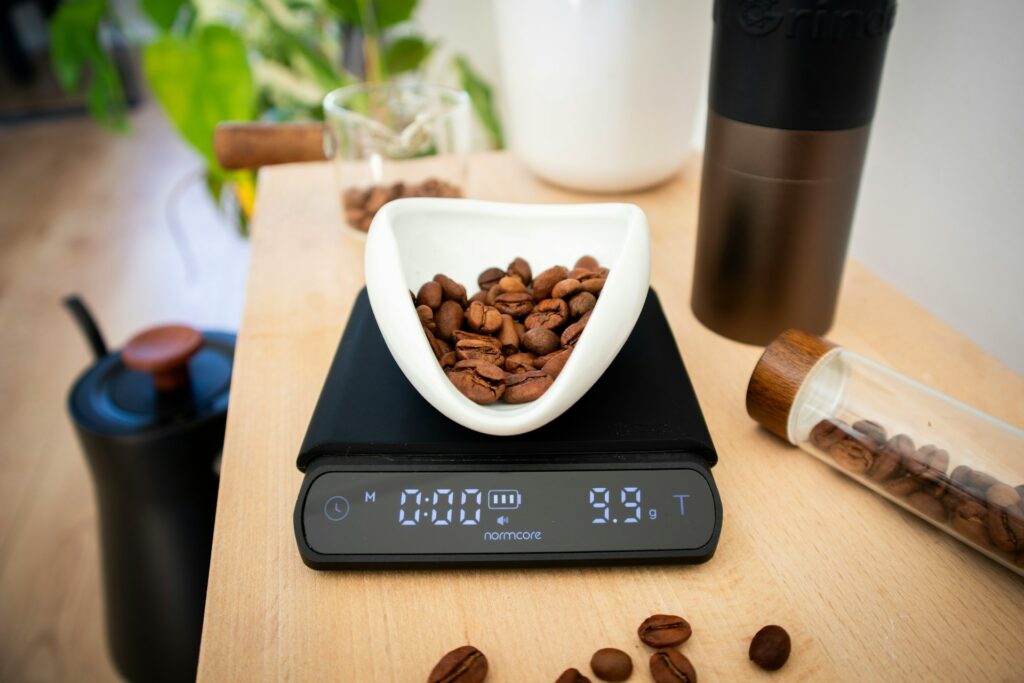
A coffee scoop measures volume, not weight, and the amount of coffee an identical scoop holds varies depending on grind size, bean density, and how tightly it’s packed. That inconsistency changes your final cup more than most beginners realize. A basic kitchen scale, even an inexpensive one, removes this variable completely.
Approximate starting ratios by method (coffee to water, by weight):
- French press: 1:15 to 1:17 — roughly 30g coffee to 500ml water
- Pour over: Around 1:16 — roughly 25g coffee to 400ml water
- AeroPress: Highly flexible depending on your recipe, typically ranging from 1:8 (strong, diluted concentrate) to 1:18 (filter-style, no dilution) — a good beginner starting point is around 1:15 to 1:16
- Moka pot: Around 1:7 — roughly 20g coffee for a 140ml pot
These are starting points, not fixed rules. Adjust slightly stronger or weaker based on taste once you’ve brewed a few cups at the baseline ratio.
Choosing Fresh Beans: What Actually Matters
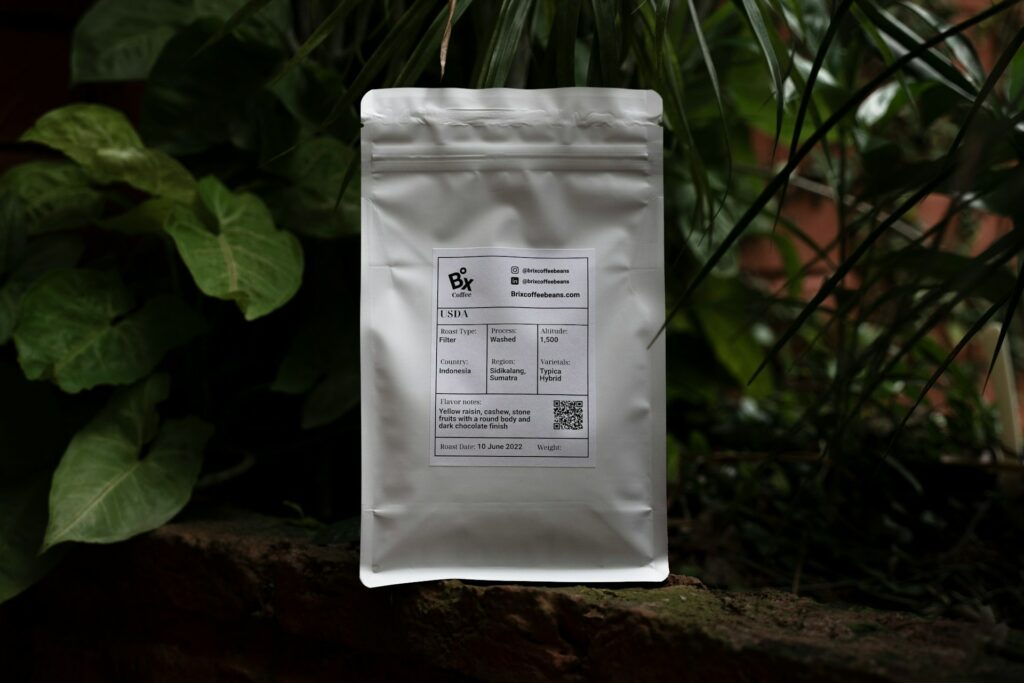
The single biggest factor in coffee quality that has nothing to do with equipment is bean freshness. Coffee begins losing flavor almost immediately after roasting, and pre-ground coffee loses flavor even faster than whole beans because more surface area is exposed to air.
What to check when buying beans:
- Roast date, not expiration date — look for a roast date printed on the bag. Coffee is generally best used within 2–3 weeks of roasting for peak flavor, though it remains reasonably good for longer.
- Buy whole beans, always — grind just before brewing, not in advance. Whole beans stay fresh far longer than ground coffee.
- Buy smaller quantities more often — a bag you’ll finish in 1–2 weeks beats a large bag that sits opened for a month, regardless of price per pound.
How to store beans properly: Keep beans in an airtight, opaque container, away from heat and light. Avoid the fridge — moisture and odor absorption do more harm than good. Freezing only makes sense for long-term storage of unopened bags, and beans shouldn’t be repeatedly thawed and refrozen.
A Simple Starting Recipe for Each Method
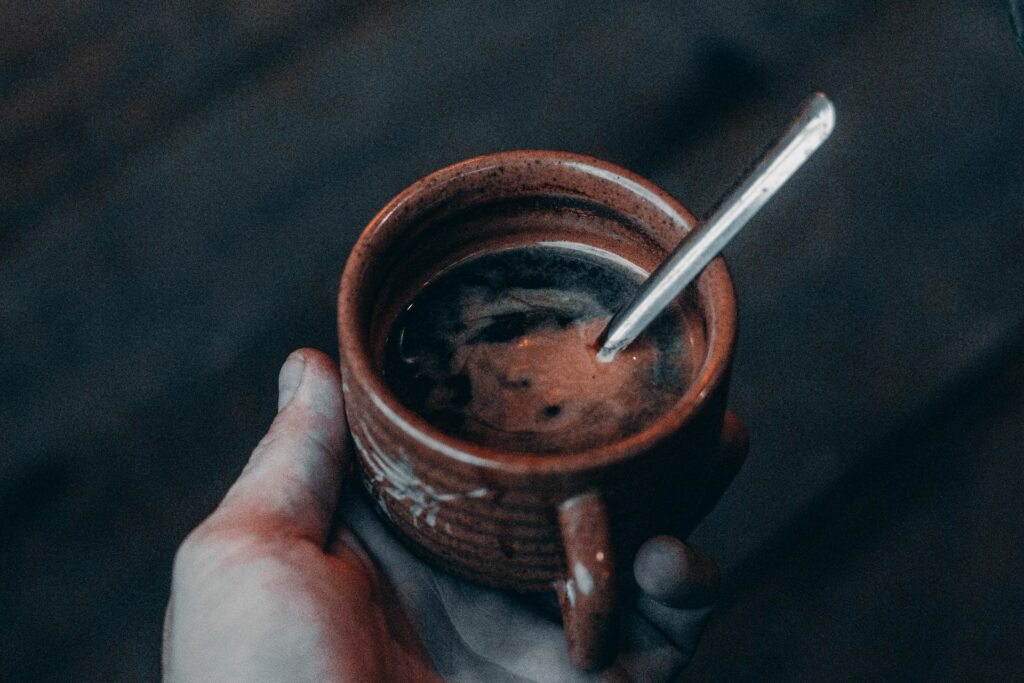
If you want to skip the adjustment process and just start with something reliable:
French press: 30g coarse-ground coffee, 500ml water at 200°F (93°C), steep 4 minutes, then plunge slowly and pour immediately — don’t let brewed coffee sit on the grounds.
Pour over: 25g medium-fine coffee, 400ml water at 200°F (93°C), poured slowly in stages over 2.5–3 minutes.
AeroPress: 15g medium coffee, 225ml water at 195°F (90°C), steep 1.5–2 minutes, then press slowly over 30 seconds.
Moka pot: 20g fine (but not espresso-fine) coffee, fill the water chamber to just below the valve, use gentle stovetop heat, and remove as soon as the flow turns pale and hisses — around 4–5 minutes total.
Brew the same recipe a few times in a row before changing anything — consistency in your process is what lets you actually taste the effect of any single adjustment.
Common Beginner Mistakes to Avoid
Using pre-ground coffee. Even good pre-ground coffee is well past its peak flavor by the time it reaches your cup. A basic hand grinder solves this for very little money.
Guessing measurements instead of weighing. A scale costs less than a bag of good coffee and removes the single biggest source of inconsistency in home brewing.
Water that’s boiling, not brewing-temperature. Water straight off a rolling boil is hotter than the ideal range for most methods and tends to pull out excess bitterness.
Leaving French press coffee sitting on the grounds. Coffee continues extracting after the plunge if left in the press — decant into a cup or separate container immediately after brewing.
Buying beans without checking the roast date. A bag with no visible roast date, or one that’s several months old, will underperform no matter how well you brew it.
Summary
Making genuinely good coffee at home doesn’t require an espresso machine or a large budget — it requires fresh beans, a decent grinder, a scale, and a brewing method that matches what you actually want to drink. French press and pour over are the easiest starting points, AeroPress offers the most flexibility, and Moka pot gets you closest to an espresso-style cup on a stovetop. Get the grinder and the beans right, and the rest is mostly a matter of practice and small adjustments.