Best Espresso Machines Under $300 in 2026
You don’t need to spend $500 or more to make real espresso at home. The under-$300 category has genuinely improved over the past few years — machines at this price point now pull proper 9-bar espresso with real extraction, not the pressurized-basket approximation that dominated budget machines a few years ago.
This guide covers the machines actually worth considering under $300 in 2026, based on current pricing, what each one does well, and who each is actually built for.
This post contains affiliate links. As an Amazon Associate, I earn from qualifying purchases at no extra cost to you.
What to Look For in an Espresso Machine Under $300
Before getting into specific machines, it helps to know what actually matters at this price point — because most spec sheets list numbers that sound impressive but don’t affect your shot quality.
Pressure (bar rating): Marketing loves to advertise 15, 19, or even 20 bar pumps, but properly extracted espresso only needs about 9 bars of pressure at the puck. Anything above that is marketing, not meaningful performance.
Basket type: This is the detail budget shoppers most often miss. Pressurized baskets (common on entry machines) make it nearly impossible to pull a bad shot, but they also cap how much you can improve your technique. Non-pressurized baskets require real skill to dial in but let you actually develop as a home barista. Some machines — like the De’Longhi Dedica — include both, so you can start easy and switch to non-pressurized once you’re ready to learn proper technique.
Steam wand type: A separate, adjustable steam wand gives you real control over milk texture as you improve. Fixed panarello attachments are easier for beginners but limit your ceiling for latte art and microfoam texture later.
Build quality: Most machines in this range use plastic bodies, but check for a stainless steel boiler specifically — that’s the component that actually affects performance and durability, regardless of what the outer shell is made from.
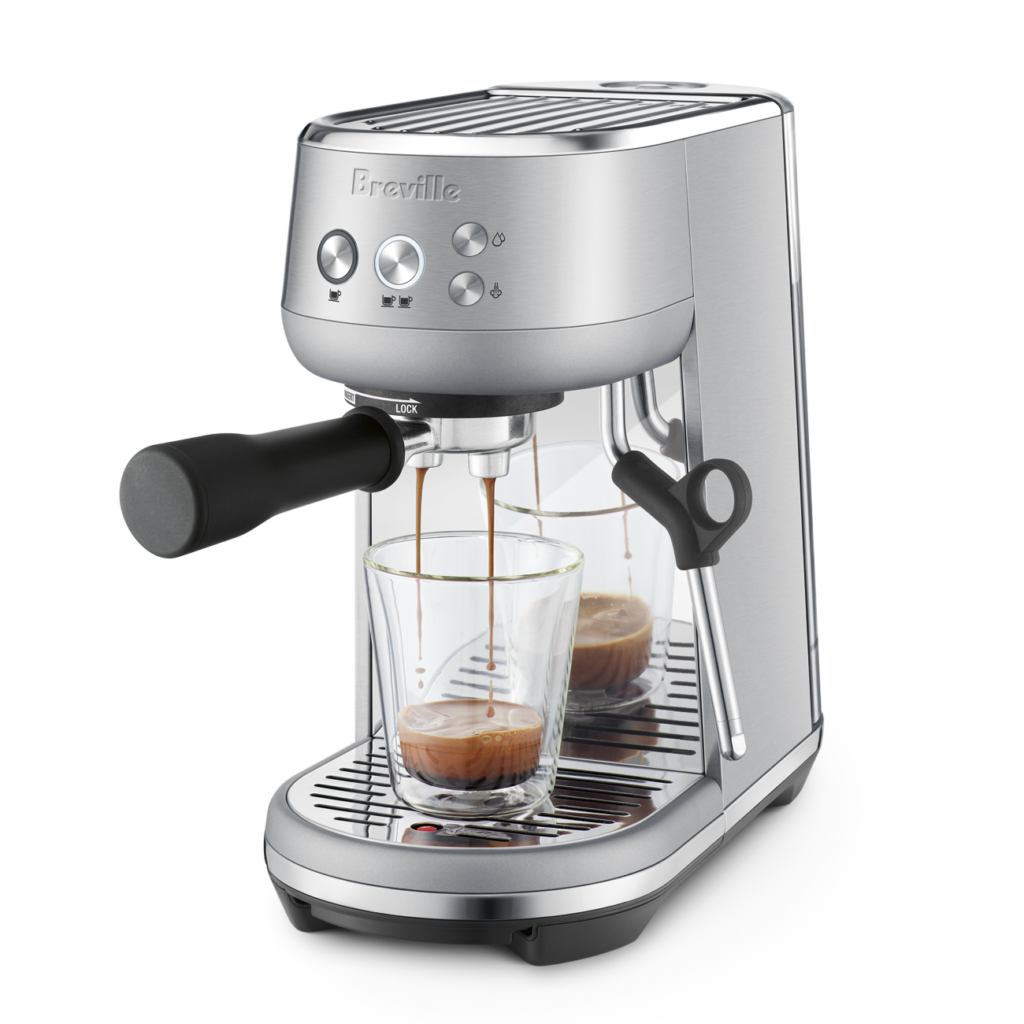
Breville Bambino — Best Overall Under $300
Price: $299.95
The Bambino sits right at the budget ceiling of this list, but it delivers the cleanest overall value in the category. Its ThermoJet heating system reaches brewing temperature in about 3 seconds, which is genuinely useful for anyone brewing on a weekday morning rather than waiting for a machine to warm up.
What it does well:
- Fast heat-up time means less waiting, more consistency shot to shot
- PID-style temperature control keeps extraction consistent
- Compact footprint fits small kitchens and counters
Where it falls short:
- At $299.95, it uses nearly your entire budget on the machine alone, leaving little room for a grinder — and as covered throughout this site, the grinder matters more than the machine for shot quality
- Water tank is smaller than some competitors, meaning more frequent refills for households that drink a lot of espresso
Best for: Beginners and daily drinkers who want minimal learning curve and don’t mind spending close to the full budget on the machine itself.
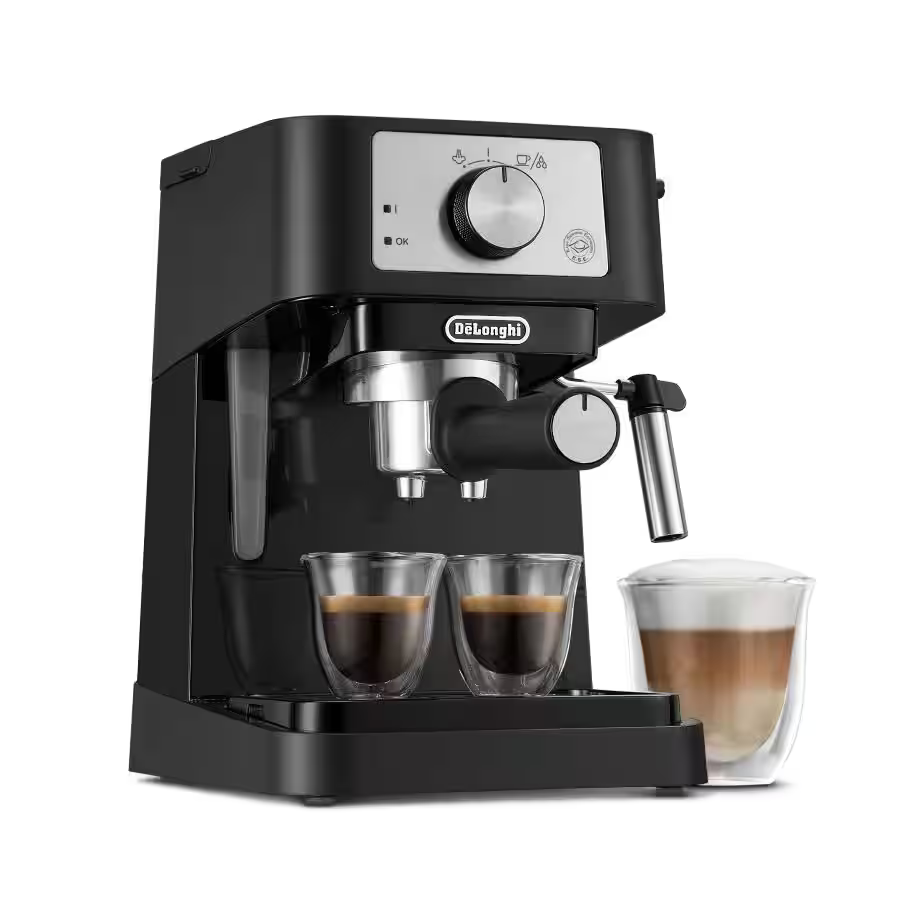
De’Longhi Stilosa EC260BK — Best Budget Pick
Price: $149.95
The Stilosa is the practical choice for anyone who wants to leave real money for a grinder, scale, and fresh beans rather than spending it all on the machine. At under $150, it includes a genuine stainless steel boiler and a proper steam wand — two components that budget machines usually cut first.
What it does well:
- Frees up roughly $150 of a $300 budget for a decent burr grinder, which will improve your shots more than a pricier machine would
- Real steam wand instead of a foam-only attachment, giving room to develop steaming technique
- Low financial risk if you’re not yet sure home espresso is something you’ll stick with
Where it falls short:
- Plastic body and a tamper that’s widely considered an afterthought — budget an extra $15-20 for a proper metal tamper
- Requires more manual attention to dial in than machines with PID control
Best for: Budget-conscious beginners who understand that the grinder matters more than the machine, and want to allocate their budget accordingly.
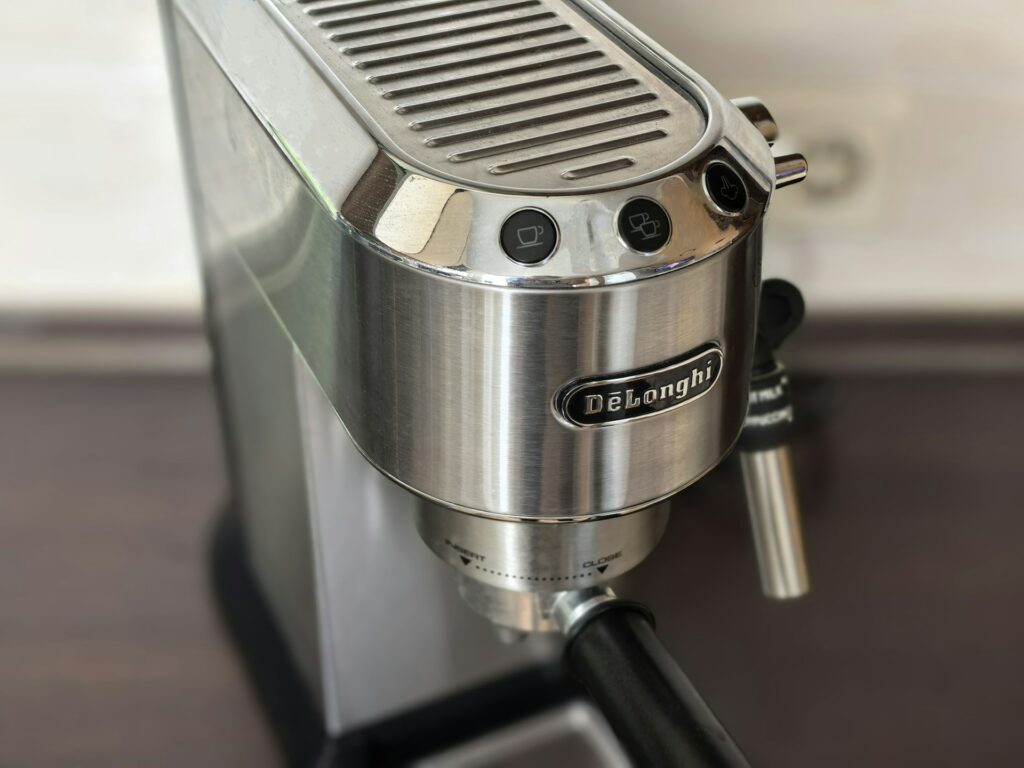
De’Longhi Dedica Style — Best for Growing Your Skills
Price: varies, typically $149.95
What sets the Dedica apart from other machines in this range is its flexibility. It ships with pressurized baskets, which make it beginner-friendly out of the box, but you can also buy non-pressurized baskets separately once you’re ready to learn real tamping and grind adjustment. Few machines under $300 offer that kind of upgrade path without replacing the whole unit.
What it does well:
- Grows with your skill level rather than being outgrown quickly
- At roughly 6 inches wide, it’s one of the slimmest machines available, useful for tight counters
- 15-bar pump and thermoblock heating produce solid extraction for the price
Where it falls short:
- Smaller water tank and portafilter compared to the Bambino
- Takes slightly longer to heat up than ThermoJet-equipped machines
Best for: Aspiring home baristas who want a machine that won’t become a limitation once their technique improves.
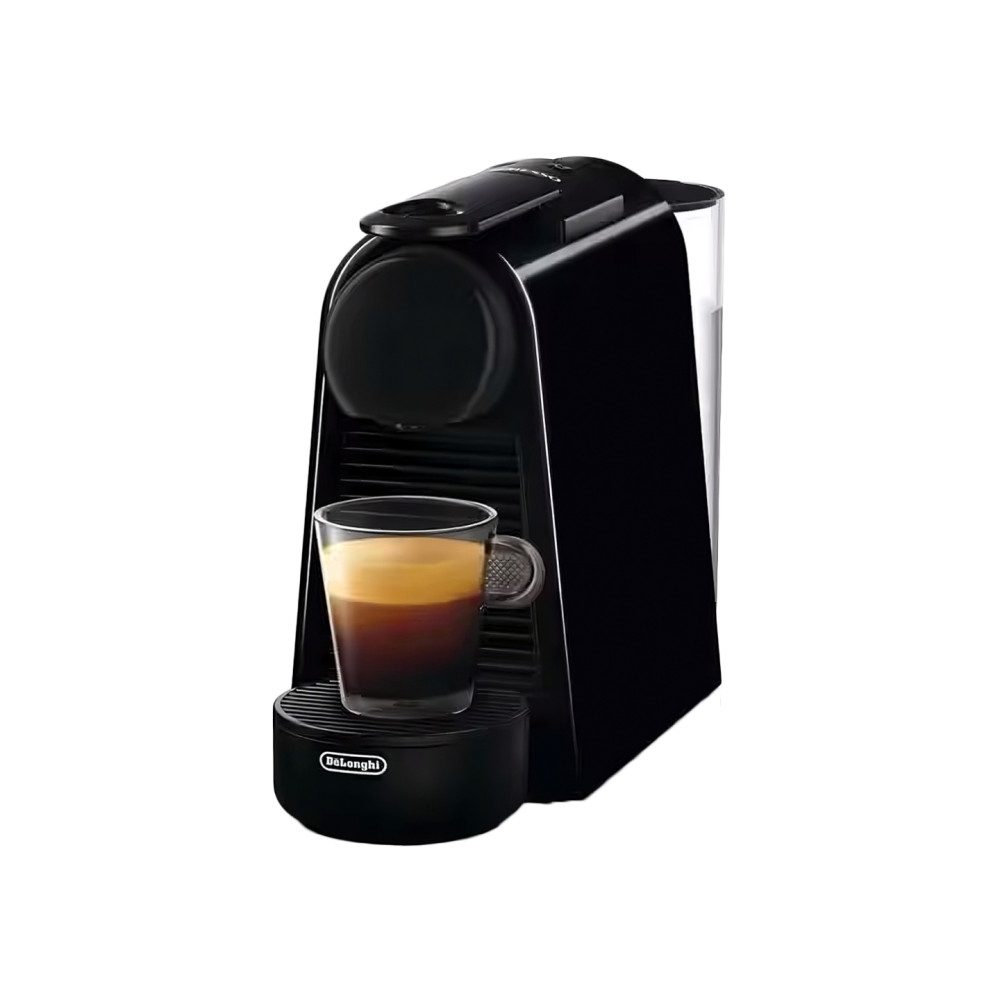
Nespresso Essenza Mini — Best for Zero-Effort Espresso
Price: $170-190
The Essenza Mini is a genuinely different category from the other machines on this list — it’s a pod-based system, not a traditional espresso machine using loose grounds. What makes it worth including is that it uses the same 19-bar high-pressure pump found in Nespresso’s $500+ machines, meaning you get consistent, quality espresso with essentially zero technique required.
What it does well:
- No dialling in, no grinder needed, no learning curve — insert a pod, press a button
- Extremely compact, fits almost anywhere
- Consistent results every single time, since the variables are controlled by the pod itself
Where it falls short:
- You’re locked into Nespresso-compatible pods, which cost more per cup than whole beans over time
- No ability to develop actual barista skills or experiment with different beans, grind sizes, or ratios
- Not a fit if the appeal of home espresso is the process itself, not just the result
Best for: People who want good espresso with minimal effort and aren’t interested in the technical side of brewing.
Machine Comparison at a Glance
| Machine | Price | Best For | Key Tradeoff |
|---|---|---|---|
| Breville Bambino | $299.95 | Fast, consistent daily use | Uses most of the budget |
| De’Longhi Stilosa | $149.95 | Leaving budget for a grinder | Basic build, needs a better tamper |
| De’Longhi Dedica Style | $149.95 | Growing your skills over time | Smaller tank and portafilter |
| Nespresso Essenza Mini | $170-190 | Zero-effort, consistent results | No loose grounds, no technique to develop |
The Grinder Question
Every credible comparison of budget espresso machines arrives at the same conclusion: your grinder affects shot quality more than your machine does. A $300 espresso machine paired with pre-ground coffee will consistently lose to a $150 machine paired with a decent burr grinder and fresh beans.
If your total budget is $300, it’s worth seriously considering the De’Longhi Stilosa specifically because it leaves room for a grinder in the same budget — rather than maxing out on the Bambino and grinding with whatever’s cheapest.
Which One Should You Actually Buy?
- Want the least effort and fastest daily routine: Breville Bambino
- Want to leave money for a grinder without going over budget: De’Longhi Stilosa
- Want a machine that grows with your skills: De’Longhi Dedica Style
- Want espresso with zero technique required: Nespresso Essenza Mini
There’s no single “best” machine in this list — the right choice depends entirely on whether you’re optimizing for convenience, budget allocation, or long-term skill development.
Summary
The under-$300 espresso machine category in 2026 offers real options at every priority level, not just compromises. The Breville Bambino leads on convenience, the De’Longhi Stilosa leads on budget flexibility, the Dedica Style leads on growth potential, and the Nespresso Essenza Mini leads on simplicity. Whichever you choose, remember that the beans and grinder you pair it with will affect your results as much as the machine itself.